
What’s so Good about Grace?

Every blog needs an adorable cat photo, especially if her name is Gracie

You can’t earn it.  You can’t buy it.  You can only receive it with gratitude.  What I’m talking about is Grace.  It’s given to you freely, abundantly and lovingly by Bhagavan (God).  It’s yours to cherish while you live in the material world.  It helps free you from the cycle of karma, and it remains with you when you return to transcendental existence.[1]

So what is Grace? All religions embrace it, and I will summarize their views in a moment.  But I first want to share my initial experience of Grace.  I was 20 years-old standing on the Berkeley shoreline at sunset, and for the first time I experienced being part of God and the entirety of existence for that moment and in all time. This was not an abstract experience, and I was not taking psychedelics or any other drug.  It was a very powerful feeling of personally belonging in a loving universe in which God, the natural world, other humans, other animals including me were playing.  I realized this way of being was what I had been looking for a very long time, over many human lifetimes.  I understand now this experience is Grace.  It’s warm and cozy and loving and it explains who you are, and what you are part of. 

And then I forgot.  I didn’t forget immediately and not entirely, but that experience gradually receded from my day-to-day life.  It took a very long time to recover Grace, and to understand the treasure that I had been given. During that more than 40-year long journey I now understand that I was searching to find Grace even though I didn’t know that was what I was looking for it, and therefore I took a very long and winding road to rediscover it. 
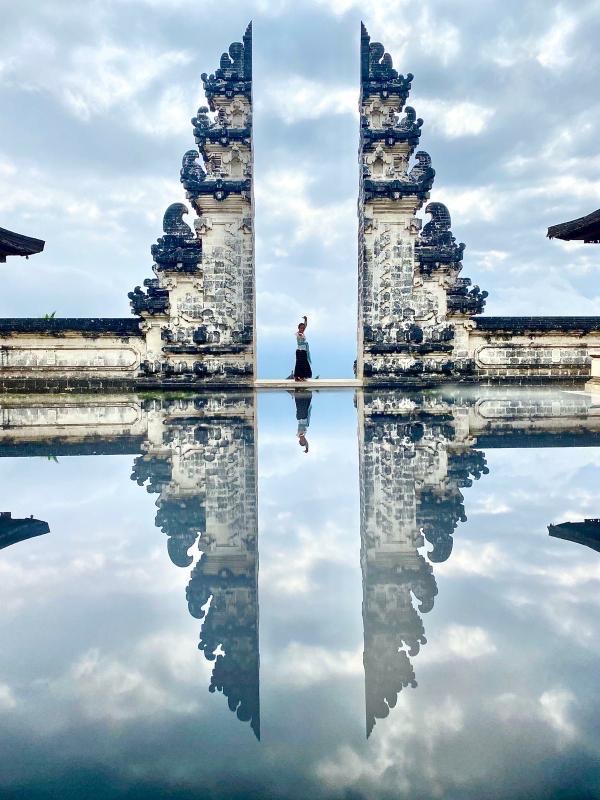
Grace thrives in Bali.

I began the search by studying Christianity, but that didn’t feel like my path.  I looked into other religions as well, but they weren’t my way either.  The quest took me to an ashram in Bali where I learned Vedic mantras, and saying those prayers over many decades really did help. It also helped to study Gandhi.  My growing love with Felicity pushed me further on the rediscovery process, and when I looked into my newborn sons eyes I began to understand as well.  I learned from friends, family, colleagues and even strangers. I learned it from doing service for others. But what really revved up my journey was finding a teacher, Jeffrey Armstrong, who finally explained what those mantras I had been reciting for so many years really meant.  He gave me the vocabulary and context to understand my experience that day 46 years ago on the Berkeley shoreline: We are divine beings living in a world that is loving, cozy and fully connected in place and time.

Understanding the philosophy of the Vedas was huge step forward, but to actually return to living the Grace I had once found, I needed another teacher.  I found him in Coimbotore, India.  His name is Baba and he showed me how to taste Bhagavan (God) again, and once I found that taste I’ve never forgotten it. Once you know the taste of chocolate, you don’t forget it, right?

Oh, from time-to-time, I do forget, but thanks to Jeffrey and Baba, I have the philosophical and tantric tools to get back in the groove, and stay in Grace…for which I am eternally grateful.
Here’s how three religions describe Grace

“Therefore, O Arjuna, wholeheartedly take shelter in the divine refuge of My Being, receive the loving gift of blissful existence, and soon you will attain to My immortal realm.”

Bhagavad Gita, Chapter 18 Verse 62

In Vedic philosophy, of which I am a very imperfect student, Grace, the eternal and unconditional loving gift of blissful experience, is yours simply by embracing Bhagavan (God). Christianity has a very similar view that Grace is the love given to us by God because God wants us to have it, not necessarily because of anything we have done to earn it.

“For by grace you have been saved through faith. And this is not your own doing; it is the gift of God, not a result of works, so that no one may boast.”

Ephesians, Chapter 2 Verses 8-9

And Grace is a key element of Islam:

“God is the Possessor of Infinite Grace” and “He bestows this grace upon whomsoever He wills (or desires).

Quran, Chapter 62 Verse 4 and Chapter 57 Verse 29
Is it really this simple?

  • How can there be Grace in a world of suffering, pain and death?
  • What if I don’t deserve Grace?
  • How can I get some of that Grace?

Some context may help.

[1] According to the Vedas, (the ancient library of knowledge from which Hindu and other religions derive) who we are really is an atma or soul who is an eternal, conscious, and joyous individual being.  We decided to visit the material world (earth, et al) to gain experience.  While here, we cycle through various lives and deaths as humans and other animals.  This is known as reincarnation.  In other words we are eternal, conscious and divine atmas (souls) who go through many lives and deaths.  Think of Bill Murray in the film, Groundhog Day. While in the material world, we are subject to the laws of karma which are the actions and reactions caused by the exercise of our free will. When we are finished with what we have come to learn and experience here in the material world, and are free of karma, then we, as atmas, return to the transcendental world from which we came.  Note: Credit to my teacher Jeffrey Armstrong for this information.  Any screw-ups are mine alone.

And if you really want to go deep:

For anyone interested in a new and inspired translation of the Bhagavad Gita, go to GitaComesAlive.com

Can I practice forgiveness about something truly awful?

This has been a privileged lifetime for me. I’ve only confronted a handful of truly terrible people, and only one who has tried to harm my loved ones or myself. If I’d been a soldier, a police officer, or a violent crime victim, forgiving would be so much harder.

But I did have an experience in Bali where I had to confront someone who was doing very despicable things to young people I love like family. I’m not going into details or naming names in this blog. Many of you may already know the story. It took some time for us to do so, but Felicity and I faced up to the crimes we witnessed, and took action to stop the behavior and to heal our loved ones. It was a very difficult time for all involved. We did some good helping some of the victims, and those who were entangled in the guilt by association and the secrets they were forced to keep. However, we are uncertain whether we successfully changed this man’s behavior or saved future victims. It’s a lingering regret.

The question that I’ve wrestled with for a few years now is whether I should forgive this man for what he did? I’ve circled around the question in several different ways. At the time this was coming down, I tried to explain to the people that I still loved him, but hated the evil actions he did. In other words, “Love the sinner. Hate the sin.” I didn’t find it a particularly compelling at the time because I was angry at the pain he had caused.

It’s taken a few years and the anger has diminished, but I worry that by forgetting what he did to those boys might allow the abuse to continue in the future. However, the more I’ve read about forgiveness and grace and Karma Yoga, the more I’m convinced that forgiveness, not forgetting, is the right course. I’ve been studying the Bhagavad Gita with my teacher Jeffrey Armstrong, and one of the verses goes right to the point:

“Because you have free will, you can control your actions, but you are never in control of the fruit or ultimate outcome of what you do. Therefore, never let attachment to the fruits be the ultimate reason for your actions. Conversely, do not simply retreat into a state of detached inaction.” (Bhagavad Gita, Chapter 2, Verse 47)

So, I think that means take action because it’s the right thing to do, but you can’t be certain if your goal will actually be achieved. Uncertainty can be a reason to avoid action. It was for me. I delayed taking action because I wasn’t sure how to address some key questions: If we took action to stop these abuses, what would happen to the victims, our Balinese loved ones, our own family? Would the abuse stop? What actions could we actually take, especially in a foreign culture?

It took time for me to work up the courage to take action. We worked our way through these questions with the help of thirty years of studying Gandhi’s principles of non-violent action, through the insistence of my mother to love him, and with the help of gifted psychologists from Bali and Mongolia. We worked out a strategy that focused on the following goals and strategies:

  1. Confirm the facts.
  2. Make sure the victims are protected and have access to expert therapy.
  3. Do truth-telling with those in the inner circle to cleanse them from guilt and obtain their assistance to stop the abuse.
  4. Enlist influential Balinese and western leaders to help stop the abuse.
  5. Directly and with love confront the man and seek his willingness to change.

The first three strategies worked out pretty well. Items four and five have had mixed results.

I confess that I have violated the Gita verse above about being attached to the fruits of our strategy. I have been attached…very attached… to the fruits of all of these actions which has led to disappointment that we have not seen definitive results for the last two of our aims.

I’ve also been reading Anne Lamott’s ‘Grace (Eventually)’ in which she quotes a friend: “You do what you can and then get out of the way because you’re not the one who does the work.  You’re not in charge of the outcome only the action.” In other words, get yourself and your ego out of the way, and let Bhagawan (God) take charge.

And I will, but to do so I must also forgive because holding on to this anger is too much for me. It’s hurting me and I have to let it go. Not by forgetting, but by forgiving because as the Gita said: “..do not simply retreat into a state of detached inaction.” Be watchful, and take action again if necessary; mindful that: “You do what you can, and then get out of the way.”

Gita Comes Alive

For anyone interested in a new and inspired translation of the Bhagavad Gita, go to GitaComesAlive.com

Forgiveness: What’s in it for me?

Forgiveness is not an occasional act; it is a constant attitude.”

You want to get rid of stress, fear, foreboding, bad dreams and lots of other junk?  Then follow Martin Luther King Jr.’s advice and make forgiveness an everyday part of your life. Forgiveness is like pouring clean water into a murky glass.  The pure water eventually dilutes the grease and grime of human life, opening the way to Nirvana and Moksa. Here are some actions to consider:

Say a prayer out loud that includes “please forgive me” asking the supreme being to forgive you for the wrongs you know you’ve committed, and those you may not be aware of.

Meditate silently, and forgive those that have hurt you and your loved ones.

Ask for forgiveness from someone that you’ve hurt.

Tell someone who hurt you and your loved ones that you forgive them.

Do a ritual cleanse like the Balinese water purification ceremony (See Washing It Off blog, August 10, 2020)

Write down on a piece of paper what you want to be forgiven for, and throw it into the fire. (See Fire Purification blog, August 11, 2020 ).

Make up your own ritual to give and receive forgiveness.

Decide to forgive yourself, sometimes the hardest act of all.

Toss your “You Hurt Me List”

You don’t realize how much your grievances are harming you until you’ve let them go. Have you ever consciously or unconsciously collected a list of complaints about your spouse, friends, enemies, the government?  I have, and just so you know, my list has a great deal of merit.  My resentment is clearly just. But you know what? Building and keeping my own “You Hurt Me List” was killing me.  It made me more resentful, angry, self-righteous and unhappy.

Twenty-five years ago I decided to burn my “You Hurt Me List.”  I made the decision because I needed to focus on helping my son Lucas and our family address his new diabetes diagnosis. The righteous grievances I was nursing were getting in the way of meeting that challenge, and so I just let them go. 

I just decided I was done with resentment, and the ugly stuff that gets dragged along with it. I didn’t use prayer, meditation or anything else from the above bullet points. If I had been practicing with these tools, I probably wouldn’t have built up the grievance in the first place.  I just decided I was done with grievance.  I thought it might be a long, involved process with perhaps therapy, and other counseling.  Didn’t happen.  I just turned on the tap of forgiveness and let its clean water begin to wash the dark stuff away. One of the best things that ever happened to me.  I felt lighter and happier almost immediately.  I treated my family and friends better. I started to enjoy life more.

There are very sound religious and philosophical reasons why forgiveness is so important to living souls.  In fact, I’ve read a great deal about forgiveness in Judaism, Hindu, Christianity, Buddhism, Vedic teachings, etc. But for me at least, I needed a practical taste of the pure tonic of forgiveness to really understand its power.

What about you?

What has your experience been with forgiving and being forgiven? What forgiveness practices have you developed?

I just have one piece of advice: It really doesn’t matter how you do forgiveness, just do it, and do so every frickin day. 

Forgiveness…What’s that all about?

Perhaps the two most difficult things for me to say are: “Please forgive me” and its twin, “I forgive you.” 

But for my soul to be at peace; to achieve the goal of being kind, compassionate and loving unconditionally, these are words I must utter every day.

According to Buddhist teachings, we should strive to live in such a way that we never harm others or are impacted by those who harmed us.  But that’s a tall order in the world we live in.   Intentionally or unintentionally, our actions can hurt other people, other animals or the planet.  If we are carnivores, our appetites require killing cows, chickens, pigs and fish.  Even vegetarians have an impact.  For example, converting what were once wild prairie lands into corn and soy bean field destroys wildlife habitat. Water diverted from the wild rivers to San Francisco for drinking and showering has drowned beautiful venues such as the Hetch Hetchy valley, and severely harmed aquatic habitat in the bay and delta.

And shall we count the ways we harm each other?  Have you ever snarled at a Customer Support person on the phone, barked at your partner while “hangry?”  Or can you recall when you’ve been the victim of slights, insults, robberies, frauds, scams, assaults, cheating spouses, liars, disloyal friends, unappreciative children…you name it?

I don’t know about you, but I’m getting triggered by writing all this junk down.  As I sketched out the list above, I found myself digging out memories which in turn brought forth emotions of resentment, annoyance, pain, fear…. and away we go.

Forgiveness is a way of getting rid of the junk, and make no mistake….IT IS JUNK… that clouds our minds, scars our relationships and fucks up our karma.

But we don’t have to hold onto it.  We can forgive and be forgiven. Forgiveness is a way of discarding the baggage so that we can move on to something far more soul satisfying: Giving and receiving kindness, compassion and unconditional love.

It’s no surprise that sages, avatars, religions and philosophies all champion forgiveness.  It’s one of the most powerful rituals ever performed to bring peace to ourselves and to the universe.

In Judaism, if a person causes harm, but then sincerely and honestly apologizes to the wronged individual and tries to rectify the wrong, the wronged individual is encouraged, but not required, to grant forgiveness.

“True forgiveness is when you can say, ‘Thank you for that experience.”

Oprah Winfrey

In the Sermon on the Mount, Jesus repeatedly spoke of forgiveness:

“Blessed are the merciful, for they will be shown mercy.”

Matthew 5:7

“Love your enemies, do good to those who hate you, bless those who curse you, pray for those who mistreat you. If someone strikes you on one cheek, turn to him the other also.”

Luke 6:27-29

“Forgiveness is not an occasional act; it is a constant attitude.”

Martin Luther King, Jr.

“O people, seek repentance from Allah. Verily, I seek repentance from Him a hundred times a day.” 

Prophet Mohammed

“Before you embark on a journey of revenge, dig two graves.”

Confucius

“One of the keys to happiness is a bad memory.”

Rita Mae Brown

Coming Up On Table Stakes:

Simple daily forgiveness rituals

How can I practice forgiveness about something truly awful?

Photo credit: Brett Jordan via Unsplash

Understanding Compassion: So what is it, really?

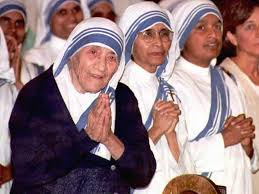
“None of us, including me, ever do great things. But we can all do small things, with great love, and together we can do something wonderful.” Mother Teresa

When I started this blog, my goal was to understand and practice kindness, compassion and unconditional love.

Kindness is easy to understand, even if it may be difficult to practice … at least for my combative self.  But compassion is more complicated.  A few weeks ago, I thought I’d just start typing out a blog about the term, but realized I didn’t have a clear idea about what compassion meant.  So I’ve been doing some reading and some thinking and a lot of trout fishing.

The common definition seems simple enough. Compassion means to see that someone is suffering and then take action to help. Jesus’s Sermon on the Mount is all about compassion. 

Blessed are the merciful, for they shall obtain mercy.”

He could walk into a crowd and see who was suffering and do something about it.  “You’re blind” he says to a couple of guys in the back row.  “No worries.”  He walks over and gives them sight.  

“You’re sick.  I can deal with that.”

“You’re hungry and thirsty.  Bring me a couple of loaves of bread and water and we can feed the lot of you and have some wine too.”

It’s not all about the miracles, however much they dazzle.  What’s behind the miracles?Of course it starts with love for these folks and the experience of a deep empathy with their burdens.  Those feelings of love and empathy are really the key to understanding compassion.  From there, it’s a a short bridge to action.  Doing what you can to heal the pain or suffering that the other person or being is experiencing.

We may not have the power to give the kind of miracles that Jesus did, but being compassionate can be its own kind of miracle both for the giver and receiver of it.

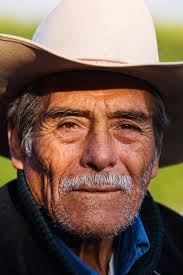
Many decades ago when I had long, dark hair, I was in Mazatlan, Mexico.  I didn’t have much money, but it was enough for a bus ticket back to the border.  But then one night I was robbed of my last few pesos (A story with a Canadian villain), and needed to get creative.  My solution? I hopped a freight train to Nogales on the Arizona border (A story about a long, dusty night drinking tequila and singing with my fellow hoboes).  I was a dirty, tired mess when I crossed through Immigration into America with a basket carrying my sleeping bag and other essentials.  On the U.S side, an older Mexican man approached me and wanted to shake my hand.  I was a little suspicious, but shook hands anyway.  When I took my hand back, I discovered the gent had given me a quarter which amounted to 25 times more money than I had in my pocket.  He smiled, patted me on the back and wished me “buena suerte.”

Have you ever noticed that you can count on poor people to help you out when times are difficult?  Anyways, a little money in my pocket helped me buy some fruit and carrots to feed me while hitchhiking from Nogales to San Diego (A story about dodging trouble from overly friendly escaped prisioners).  But more importantly what sustained me was the feeling that someone, a stranger, saw my plight, cared and took action to help.  This man’s act of charity has stuck with me since.  By being a receiver of compassion it helped me understand the value of giving compassion in small ways to panhandlers on the street, and in larger ways too.  

This is a simple story of how I learned about compassion, but it can be more complicated.  As I read more in the Buddhist, Vedic and Christian texts I found there are some associated issues that anyone who is serious about compassion must confront.

What’s the deal about forgiveness?

What’s the difference between empathy and compassion?

Are there limits to compassion?

What if those that are suffering don’t want your darn compassion?

Are you helping to gain fame or something else?

What are the “little things” you need to be concerned about to avoid hurting others?

What is ahimsa (non-violence)?

All good questions, which I’ll delve into later.  But for now, when I think of compassion, I envision a gentle Mexican man on the Arizona border helping out a poor American boy.

Canti.

Dave

Extra Credit: Guess who said this?

“It’s not about how much you do but how much love you put into what you do that counts.”

Karma Yoga Soccer

In the Bhagavad Gita, Krishna spells out the essential pathways (yogas) for connecting your soul with the divine. One of these is Karma Yoga, which is the path of action.  Karma Yoga is to act selflessly in the service of others.

Serving not only helps others, it helps yourself by developing the habit of being kind and compassionate. 

The hard part is to “act selflessly,” not expecting to gain anything personally from serving others. Just doing good because it’s the right thing to do. 

In other words, intention is everything.  Posting Instagram photos of your act of kindness, taking a few bows for making a big donation to charity.  This isn’t Karma Yoga and it won’t get you any closer to Moksa.

One good example of how to practice Karma Yoga right was by my son Lucas.  We were traveling in Baja California, and he had brought some soccer balls with us to give away.  We were at a friend’s house in a poor village in Baja California.  Across the street, were three kids playing in a dusty driveway.  Luke walked over and gave them each a brand new soccer ball.  At first they were confused that anyone would give them such a gift.  Who was this Santa Claus?  But they quickly became engrossed with their new balls.

Like any good public relations guy, I suggested to Luke that I take some photos of him with the kids and their new soccer balls.  We could post them on his DASH Camp FB feed.  “I didn’t do it for the publicity Dad,” he explained.  “I just wanted to bring joy to them.”

So that sums up Karma Yoga.  It feels good to everyone involved.

Washing it Off

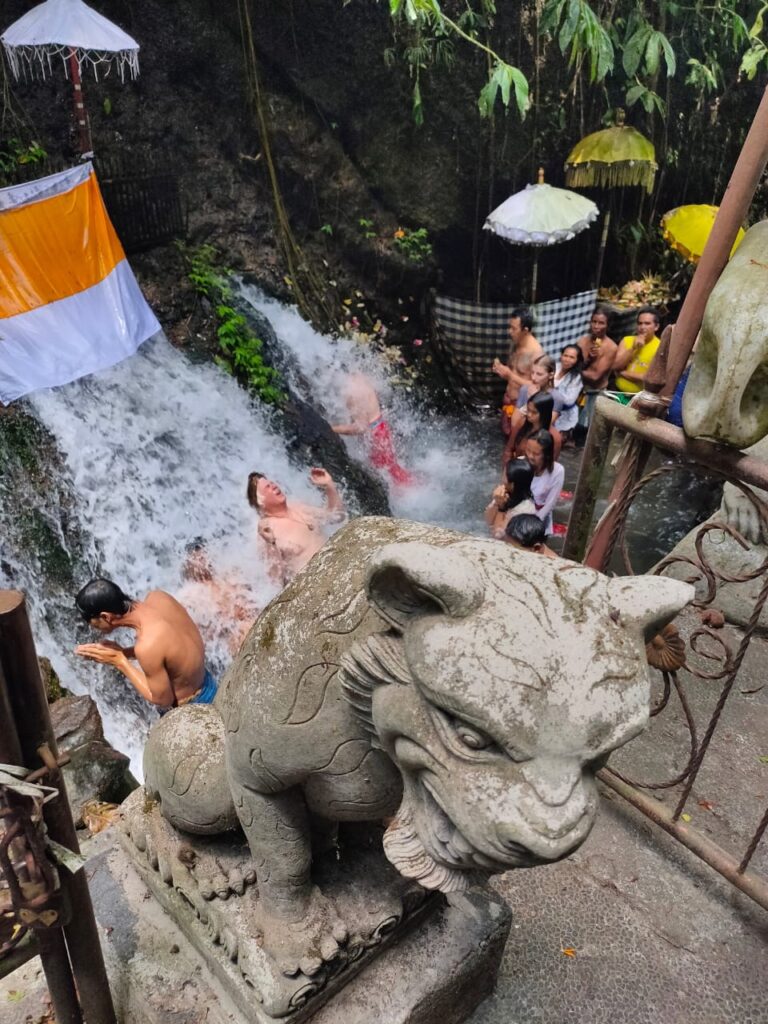
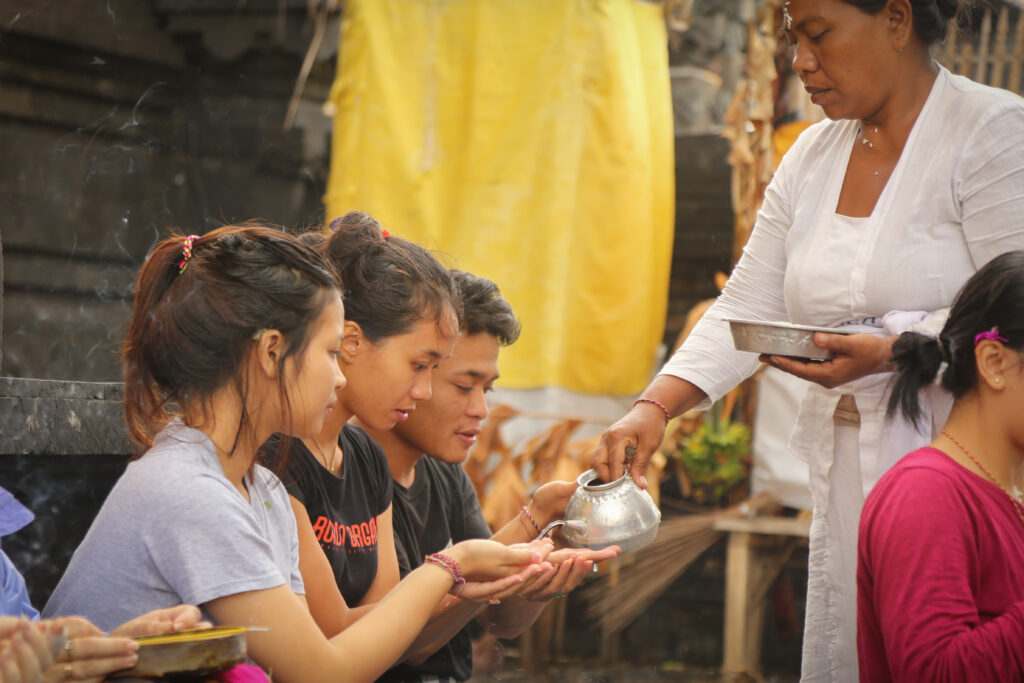
Water purification ritual at Lampuyang…a rite that Balinese do at least once a day

One of the things I love most about Bali are the water purification rituals. 

Every day, Balinese people take part in this rite which involves being sprinkled with holy water, drinking it three times and then washing three times. It’s a simple, but powerful ritual to ward off spiritual and energetic gunk that has stuck to you.  This could be from an angry confrontation, some evil spirits grabbing you, a bad dream or some bad thoughts or feelings you may be having about yourself or someone else.

Whatever it is, you can use this ritual to get rid of it…to let it go.  We sometimes dismiss such rituals in the west, but they can be effective ways of first acknowledging that detritus is sticking to you and then dealing with it or simply letting it wash away.

The act of letting this junk go is what reminded me of Nirvana.  And there is a link to the main point of this blog (Kindness, Compassion and Unconditional Love).  Because these practices often require letting go of some useless stuff like anger, expectations, and keeping track of whose right and wrong.  It’s impossible to be kind and compassionate if you’re pissed off at someone. In fact, the best marriage advice I ever heard was from a retired general we met in India who said: “Best thing for a good marriage is a sense of humor and a bad memory.”

The Balinese are practical folks.  They get that everyday sprinkling of purification may not be enough if you’re experiencing some big problem.  Sometimes the whole village needs to get cleansed from some bad stuff going around.  All the villagers might load into the truck and vans and head over to a water temple like Tirta Empul to get clean from the bad energy of a neighborly dispute.  I once witnessed a woman who had been possessed being taken to a temple by her family to be cleansed.  The evil spirit writhed, twisted and fought against getting dunked into the holy water. It was like a scene from the Exorcist. The demon resisted and the lady flailed about until her husband dunked her in and she spit the evil thing out.  Took about ten minutes in all, but she exited the water clean and free of what had possessed her.

Which makes me think about our country. Perhaps we all need a ritual cleanse.  So haul yourself down to the beach or jump in a pool and wash that evil joojoo coming from DC and Mar A Lago off….at a safe distance of course.  But get it off you…scrub well…maybe scream some of the frustration out…and then hit the streets to boot the devil out, so we can scrub the WH clean.

Sorry for the political moment…

Canti,

Pak Dave

Doing a full-body cleanse at Sebatu, Bali

Leaping from the DMV to Nirvana

So the one good thing about standing in line at the DMV is that it gives you time to think. In my last blog, I described how I partially succeeded in letting go of the frustration, annoyance and anger that usually sticks to me when I visit my least favorite bureaucracy.

And thinking about letting go, led me to the idea of Nirvana.  I recently listened to a lesson from my friend and teacher Jeffrey Armstrong about Nirvana.  Apologies to Jeffrey if I have screwed this up. 

I must admit I never really thought that much about Nirvana until I listened to Jeffrey’s lecture.  I assumed it was akin to heaven or paradise.  And indeed for Buddhists, Nirvana is the goal of the eight -fold path of right practices, and is the gateway for escaping from karma and the cycle of birth and death.

Jeffrey took Nirvana in a different direction.  He explained that Nirvana from the Vedic perspective means letting go of everything except who you really are.  That means letting go of your attachment to stuff, letting go of your thoughts, letting go of the security of a safe retirement fund, letting go of your plans and ambitions; and importantly letting go of your emotions. 

It’s a stretch concept, especially the letting go of your emotions. I don’t know about you, but I really like holding on to feelings and emotions.  The good ones like love, and unfortunately some of the bad ones like anger and resentment too.

It’s not that you deny these things.  It’s just that you experience them, and then send them on their way.  And when you’ve let go of it all, you’ve reached Nirvana, a place of peace, escape from the cycles of human existence, and you can simply be who you really are… more about this later…

…Calling Number K-013. Go to station Number 24…Last call for Number K-013.  Go to Station Number 24.  The alerts over the DMV loudspeaker, awoke me from these thoughts.  There are a lot of different interpretations of Nirvana in Buddhist and Vedic philosophy.  What I’ve provided here is pretty bare bones.  However, it’s the first definition of Nirvana that really spoke to me. 

But please don’t give me an incomplete.  The DMV has gotten more efficient, and they called my number before I had finished my thoughts.  More on Nirvana and its cousin, purification, in the next blog.

Canti,

Pak Dave

Photo Credits Above: Jamie Street. Below: Lorna

A Difficult Test at the DMV

If you want to test your resolve to be kind, compassionate and love unconditionally; visit the California Department of Motor Vehicles (DMV) to apply for your Real ID.

DMV trips have always triggered me.  It’s the inane, arbitrary procedures that require waiting in numerous lines.  The often surly staff.  Did I mention the hours long wait.  Being informed by an officious staffer that you’re missing a document and you’ll have to return for another visit and wait in line again.  Was that a look of glee in her eye when delivering the news?

I confess that I often have responded to such visits with internal seething, teeth gnashing, ranting under my breath and at times biting sarcasm, the latter of course makes things much worse. 

Yesterday’s visit was headed in the same direction when I asked a security guard which line I should stand in, and received a curt, insulting answer.  My face turned red underneath my mask, but I walked on, where I encountered more DMV staff getting off on their own power trips.

I didn’t rant, but I might have offered a pathetically weak sarcastic rejoinder.  However, at least I wasn’t the guy who melted down when told he had stood for two hours in the wrong line. 

But I got over it with help from what my Kundalini guru Liya (liyagarber.com) said in class one day: “You can’t control it if people say spiteful things to you, but you can control how you receive it.”  You can decide whether to be hurt… or not ..if your partner insults you.  And you can decide to get angry.. or not…when the DMV security guard is a jerk. 

Of course, this isn’t as easy as it seems.  It took me a few minutes to get my head turned around and try not to follow my pattern of getting triggered.  So I decided what the hell give it a chance, and just let go of the DMV staff’s bad behavior.  And, I must admit, I began to notice a few improvements.  I calmed down. Some of the staff were actually quite helpful, competent and nice.  The procedures and computer systems seem to have improved too.  And it occurred to me maybe I should look at it from their perspective of having to deal with the same questions from stressed customers…all the while wearing a mask and hoping you don’t get infected with COVID. 

I’m not sure this qualifies as an epiphany, more of a duh…But I’m marking it down as a step forward in my journey.

And somehow this got me thinking about Nirvana…but that’s the subject of the next blog.

Photo Credits: Above: Jeremy Lishner. Below: Artem Beliakin via Unsplash