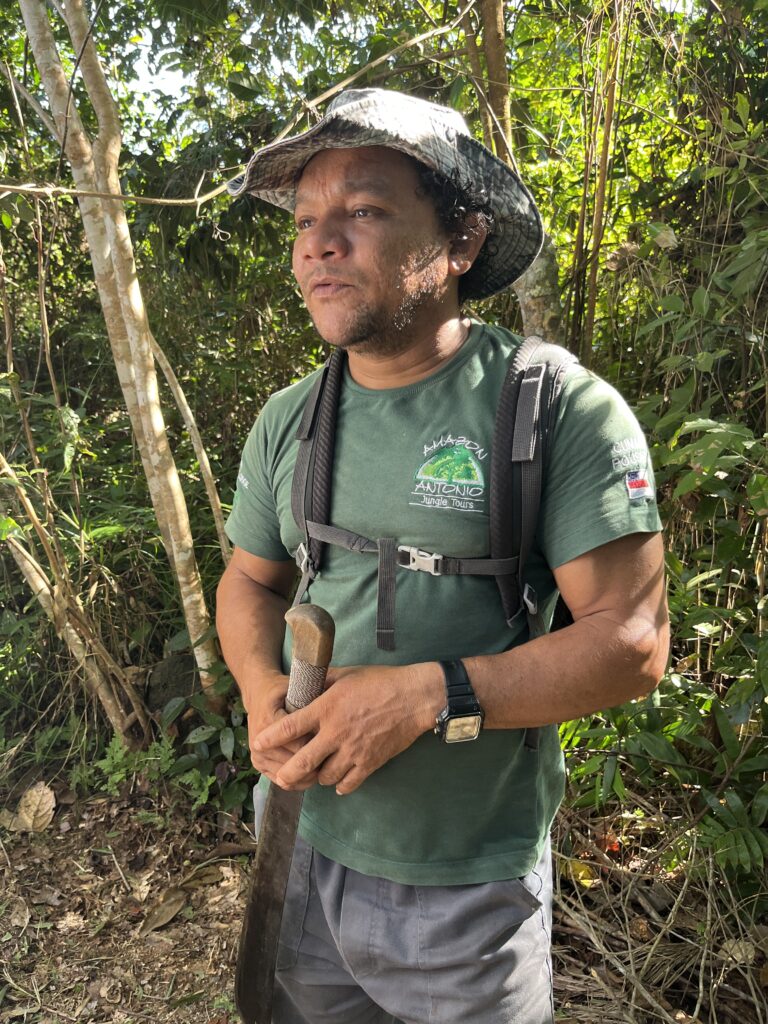
“He was so shy; he wouldn’t even look at me or any of our clients and he would never say a word.” This is how veteran Amazon guide Antonio Gomes described Leio, his young assistant who walked away from his remote Amazonian tribe about 20 years ago.Leio has become much more outspoken these days, as he shared his insights as our guide on a three-day visit to the Amazon jungle northeast of Manaus, Brazil.
“I am from the Wapichana people, and I lived deep in the jungle with my family including my parents and my six brothers and six sisters,” Leio told us. “The forest gave my family all it needed to survive: Food, shelter and medicine. My father taught me how to hunt and fish, and my mother showed me which plants we could eat and which ones we could use to heal,” he said.
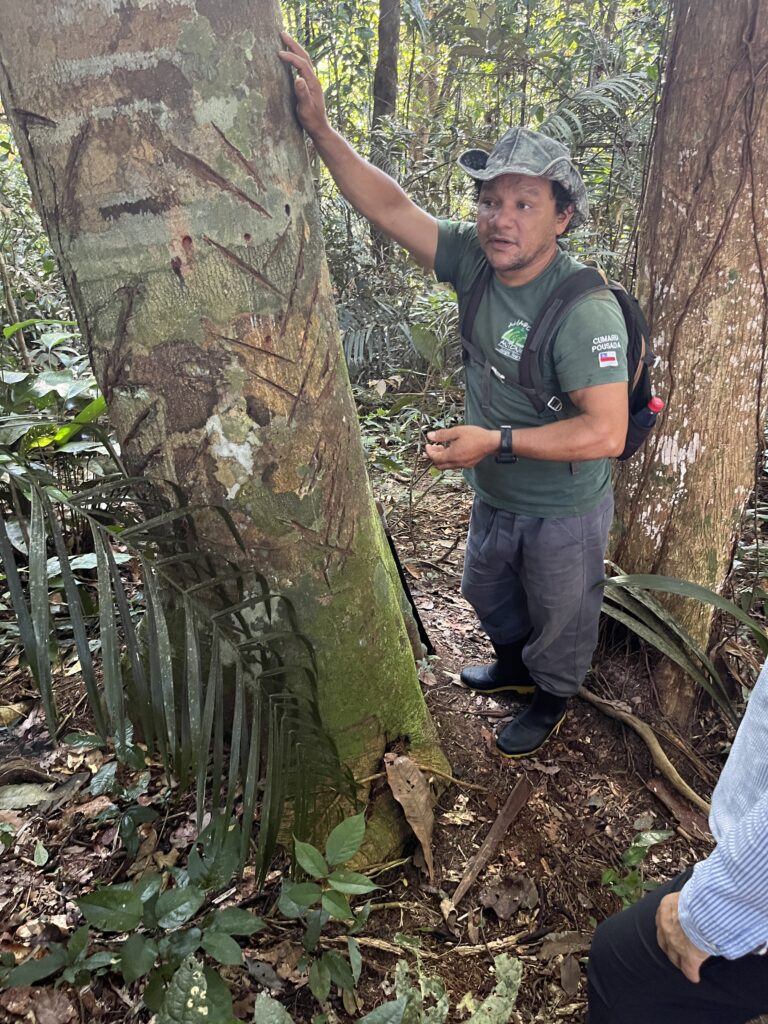
Leio took us on a hike in the rainforest behind Antonio’s Jungle Lodge, and it was like walking through a pharmacy. “If you boil the leaves of this tree here, it will help if you ease belly pain. A few steps later he ripped some bark off another tree. “Women make a tea from this bark to help reduce the pain from menstruation. And on it went. Unlike forests in the US which only have a few tree species, dozens of different trees grow within an acre of rainforest. We ticked through dozens of more plants that can be used for medicine.
Leio gradually opened up to us about his life. Around twelve years old because of lack of food and fear about attacks from neighboring tribes, he decided to leave his family. It was the beginning of a long, difficult path. His first step was a visit to his grandmother who he told about his intention to depart his family. She didn’t try to discourage him from leaving, but she did give him an earful of advice. “Don’t hang out with bad people who drink or steal. Find a way to go to school. Remember I love you,” she said.
And then he departed with a friend from the village. They first journeyed to a village where they knew no one. They had no money and knew nothing about how to live outside of the forest. However, sympathetic families along the way heard their story and gave them food and a place to stay. They made a little money working. Eventually, they had enough money to attend school. There was a problem. The school would not allow him to enroll unless he had a signature from a parent. Again, a new friend stepped in and signed the school form. Still, it was not easy to attend class. Leio had to row a canoe for 1.5 hours each way to and from school.
The education he received and what he was learning about life outside his village encouraged Leio to continue his journey into bigger and bigger settlements. Eventually, he found a job driving a boat for an Amazon River jungle tour group. From there, he found a job as a cook where he began to learn some English. Learning English was key to launching a career as an assistant guide for Antonio. But as Antonio told us Leio was still a village boy at heart and scared to talk to the English-speaking clients.
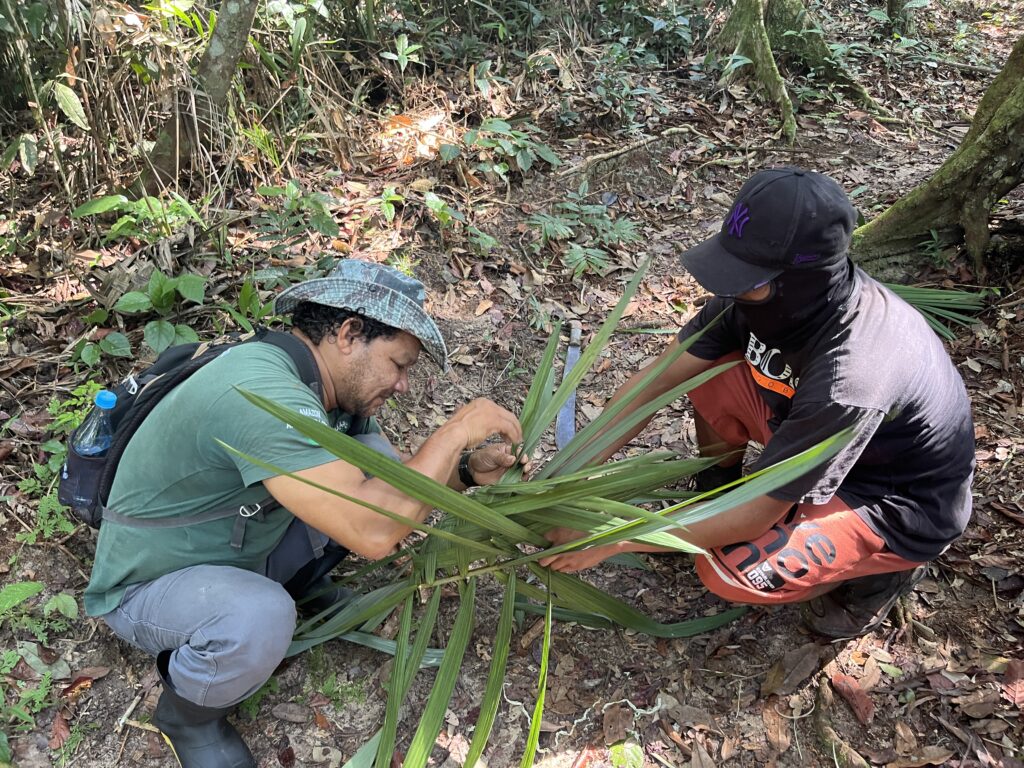
“Do you want to learn how to trap animals in the forest?” a now confident Leio asked us during out jungle hike. He then proceeded to teach us how to make snares, a bow and arrow and a simple blow gun. He showed us where to find arrows for the blow gun and which plants to extract poison to put on the tips. Useful knowledge for city slickers like us.
We also saw a toucan, monkeys and other animals on that hike and more on the boat trips on the river and swamps in the region. The shy jaguar and puma stayed hidden during the day when we were out in the jungle, but still lurked in the vicinity.
Leio’s jungle knowledge is legion, but he is also now a gifted linguist. In addition to his native Wapichana language he’s fluent in Portuguese, English, German, Italian and Flemish. He can also get by in French as well. And he has traveled around the world too including living in Belgium. He’s come a long way, but Leio is still most comfortable in the jungle with his family.